
Buckwheat starter
Buckwheat. I had shown it the door. Sure, a type of flour that constantly keeps you guessing is all well and good, but it was exhausting. It’s a magician, and not just any magician. It’s that loud, annoying uncle who insists on performing his tricks at every birthday party, whether you asked him to or not. Granted, some of this family illusionist’s antics can be amusing, but his presence is utterly draining. So, there’s only one solution: stop inviting him.
Mix water with buckwheat, and its gluey, stringy consistency might lead you to believe it’s the ultimate gluten substitute. In reality, buckwheat flour contains a mucilaginous substance, also know as polysaccharides, that creates this stickiness. But that doesn’t make it a true gluten substitute. If you use it to create a sourdough starter, it barely rises, produces only tiny air bubbles, and makes it notoriously difficult to pinpoint its peak moment of activity.
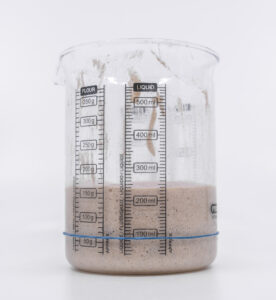
But then a new technique shows up. Buckwheat is not an option, but a necessity. From an annoying magician to one whose performance you simply have to see. From a 50% yield to 160% (see picture). Well, what can I say, buckwheat is back in the pantry.